Things that shape a person, and how that shaping shapes your future and view of the world we live in.
August 2026
My father was an officer in the United States Air Force and I spent my formative years living in Japan from age eight to eighteen. As the oldest of four daughters, I have the most vivid memories of living in Japan and going to school on an Air Force Base. We lived off base in a traditional Japanese community, so I was emmerced in the the culture and learned to be self-sufficeint at a young age.
One of the first things my father taught me was some valuable Japanese phrases. I was in charge of a younger sister when we caught a local Japanese bus that tranported us to elementary school daily. When we got to the stop where the base school was, I was taught to stand on the seat and reach up to a cord and to pull it and say: “Koto-mate-cud-i-si.” [excuse my transliteration of the phrase!] It simply means “Please Stop.” At this time we lived just outside of Tokyo.
My first experience with death was at age eight. Since we lived off base, I played with the Japanese children on the dirt road where we lived. One day my father took my hand and led me to the home of one of my playmates. What I saw, felt and smelled has never left my pysche. The little girl I had played with had died of the mumps.
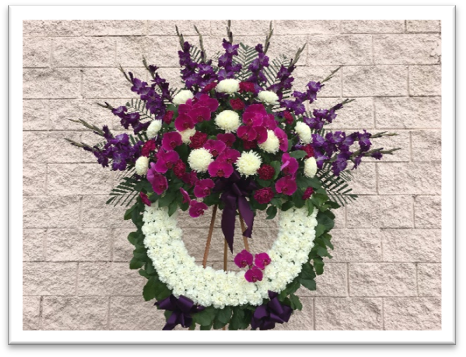
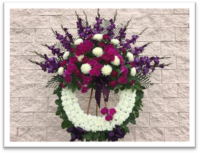 As we walked down the road to her home, I saw many of these outside the home: A Hanawa (花環) .
This tradition in Japanese culture is the placing of a large, round floral and ribbon decor standing on tall tripods, placed outside a home in Japan after a death. This is a form of funeral signage or wreath that indicates a passing has occurred and provides information about the funeral services. The one pictured to the right is a modern day Hanawa.
Here are the key details regarding these decorations:
- Hanawa (Wreaths): These are large, circular funeral wreaths known as hanawa, often decorated with white and black ribbons, artificial flowers, and sometimes the name of the deceased or the family. Hanawa (花環) are large, traditional Japanese funeral wreaths, commonly featuring vibrant artificial flowers on bamboo stands, which grew in popularity during the mid-20th century.
- Purpose: The hanawa is placed outside the home or the funeral venue to signal that a death has occurred and to direct mourners to the service. It is a visible sign of mourning and respect.
- Color Symbolism: The wreaths typically use white, black, or subtle colors, as white flowers (especially chrysanthemums) represent mourning, purity, and the soul’s journey in Japan.
- Signage Information: The ribbon or wreath often displays the family name, alerting neighbors and community members to offer koden (monetary condolences).
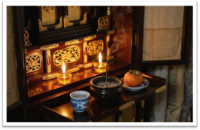 After bowing and my father speaking Japanese to the family, we were invited to come inside and knee of zabatan pillow in front of a family altar. This took some explaining for me to understand what cremation was and how my friends’ ashes on this family altar were kept in the home. To say I went home confused, worried, and overwhelmed with an eight-year-olds questions is an understatement.
The photo on the left shows, is a traditional Japanese home altar for remembrance, offerings and ongoing connection to a loved one who has passed on.
The incense burned at these family altars is very strong.
As an eight-year-old experiencing the death of a playmate from the mumps this had a lasting effect on my smell senses. To this day I cannot breathe in any incense without returning to me eight-year-old self at this event in my life.
High School was a different story. We were then based in far northern Honshu at a remote base. It was so remote, I had only 30 kids in my graduating class. These years shaped my pysche with the varied experiences I was given as a teenager. Some of those vivid images and experience are given below.
On the base where my father was stationed was on “church/ chapel” with several Air Force Chaplains. One Catholic, One Jewish, One Protestant, that served all faiths on the base. The high school group of kids that were ministered to were called the PYOC which means Protestant Youth of the Chapel. Those of us in this group routinely went on excursions around Northern Honshu.
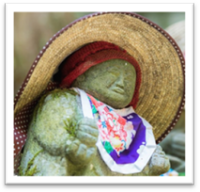 One such trip was to a children’s Buddhist cemetery. One of the eeriest places I have ever experienced. Here are some images and explanations. On this particular weekend excursion, it was cold, foggy and I felt chilled to my core and I was about to become even more cold.
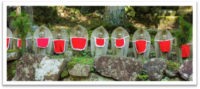 The story of Jizo originates from the 14th-century tale of the Sai no Kawara (“riverbed of the netherworld”) Jizo that is unique to Japanese Buddhism. According to legend, children who are miscarried, stillborn, or die before their parents enter a limbo, or kind of hell, at the banks of a rocky river. Here they are forced to build towers from stones to atone for the sin of causing such grief, and to help add to their parents’ merit in the afterlife. Demons then turn up every night and destroy the towers, forcing the children to constantly rebuild. Although many hues are found in the Jizos’ adornments, the most common shade is red, the color in Japanese mythological tradition that is often traced back to the ancient practice of repelling demons, themselves often colored in shades of bright ruby or vermilion.
Over time, red has come to represent both death and life, as seen in Japanese symbols from the torii gates of Shinto shrines to the Rising Sun of the national flag.
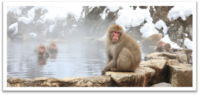 Another warmer excursion also took place in the winter months; however it was a much warmer experience. We went to see the Japanese macaque, also known as the “snow monkey,” is a terrestrial Old World monkey species that is native to Japan. Colloquially, they are referred to as “snow monkeys” because some live in areas where snow covers the ground for months each year. It seems funny now, because I remember as an adult having a subscription to National Geographic and seeing an article with photos of the Macaque Snow Monkeys and thinking, “Boy these guys are behind the eight ball, I saw those monkeys when I was a kid!”
In several previous blogs, I have discussed things that shaped in and some of the places I went and experienced things that made a lasting impression on me. One of those events is described below.
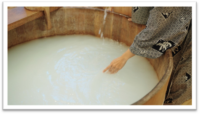 One early spring our high school group went to a town close by to experience “traditional Japanese living” and although my family had lived in Japan before, I had never stayed in a traditional Japanese home before. After the introductions and meal, a bath was drawn for me as seen on the left, and YES that is a wooden tub with mineral water heated with a fire in a a pit below the tub! It was very hot!
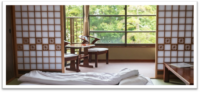
These homes were very traditional and since there was no heating in this home, that mineral bath warmed my body so that I could sleep toasty warm on the floor shown below, in the traditional style.
 As I began to graduate from High School and was accepted into college another event happened. Our family landed at Travis AFB outside Sacramento; CA and we drove to the state where I went to college. My parents dropped me off with my grandparents and to my dorm room and drove to their next duty station very far away in New York. Sounds like a college kids dream, doesn’t it? Not so for me. Living in another country for such a long time, I felt like I had been dropped off on another planet! I was in the south. People spoke funny and everyone was an “ya’ll” ~ what does that mean? Is that a foreign language I need to learn? College kids dressed different; I was grossly out of fashion due to the limited selection of clothing from a base exchange [aka a Target or Kohl’s or other clothing outlet].
I remember vividly being told by my advisor, since I had been living in the DOD [Dept of Defense] school system I would have to take extra exams. I also was reeling from tremendous jet lag of being a day ahead of the United States. We suffice it to say, I was deemed “remedial” and placed in classes that bored me to death! Then one day my roommate showed up. She was from Dallas! Another foreign country to me with another accent I could hardly understand, and she had a shower bucket of beauty routine items, I never had seen or heard or much less knew what they were for.
College for most American kids is a transitional path between childhood and adulthood. I would categorize my lifetime experiences as a pathway to understanding the world, different cultures, their religions, being highly adaptable in many extraordinary situations, and being more comfortable around people from other countries than those in the country where I was born. I have an ear for the person who has a foreign accent and there are times when I encounter a person from another country where I know smattering of their language, my head gets several languages all mixed up in my head!
When I married someone from another country [go figure!], I traveled extensively with him. When we retired, people would ask us, where are you going to travel to, to see the world? We would reply in unison ~ “No where! We’ve already been there, done that and seen that! We are staying right here at home and enjoying the peaceful quiet life we have built together!”
What’s your life story? What shaped your life? If you are a military brat like me, I bet you have some great memories that impacted the way you think and react in a situation.
Tell you stories, experiences and travels to your adult children and your grandchildren, those stories will enrich their lives!
[Unless otherwise stated, the photos are courtesy of Google, and istock photo]

janice@janicebastanicoaching.com
8914 Collina Ct.
Granite Bay, CA 95746
908-229-3797
www.janicebastanicoaching.com
www.johnmaxwellgroup.com/janicebastani